
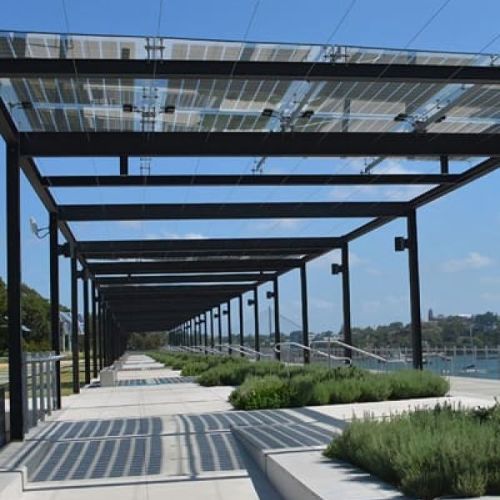
 ELEVATED PERGOLA
Shaded Utility & Walkways
Raise modules to free roof space, improve airflow and create usable shaded zones.
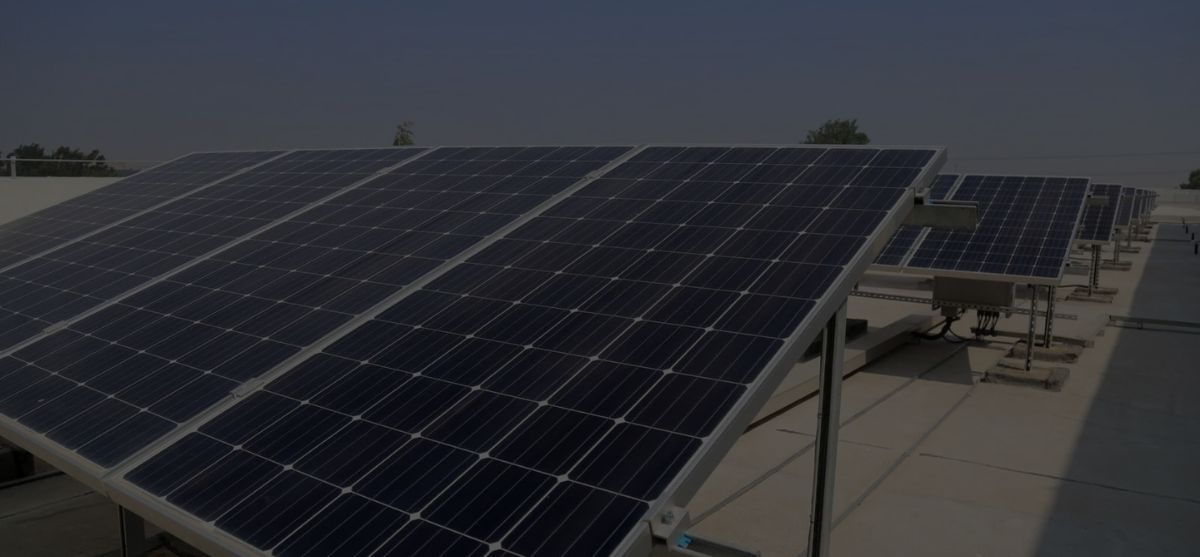
Power common facilities, lifts, pumps and EV charging with bankable rooftop solar—compliant engineering, clear governance and optimized layouts. We manage approvals, metering, and O&M so societies reduce maintenance charges and build a future-ready, EV-ready campus with predictable savings.
Engineered to maximize kWp without compromising access, safety, or aesthetics.
ELEVATED PERGOLARaise modules to free roof space, improve airflow and create usable shaded zones.
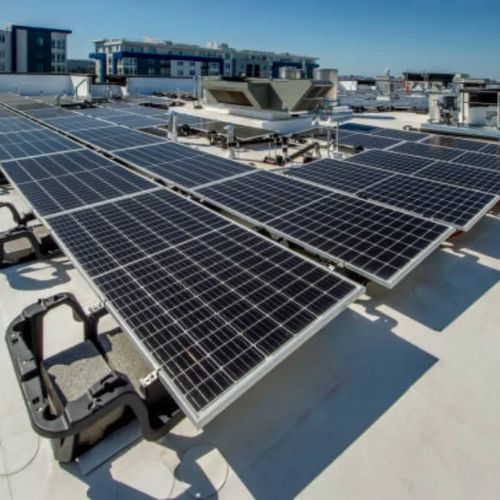 RCC ARRAYS
Ballast or anchor-based arrays with safe walkways and parapet clearance for maintenance.
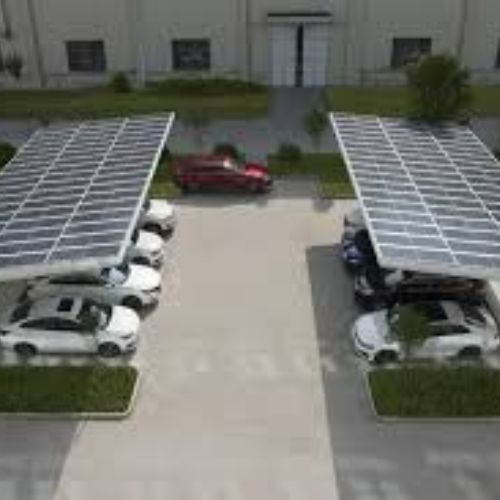 SOLAR CARPORT
Convert parking lots into power plants with drainage, lighting and EV-ready conduits.
Choose ownership (CAPEX) or per-kWh model (OPEX/RESCO) with transparent SLAs.


Rooftop solar reduces the recurring maintenance burden while enabling EV-ready infrastructure and green branding.
Offset lift, pump and lighting consumption; stabilize maintenance charges.
Integrate EV charging with energy accounting—flat-wise billing through smart chargers.
Own the plant for maximum savings or sign a PPA at discounted tariff.
Mix of elevated pergolas, regular RCC arrays and carports for parking areas.
Engineered structures, earthing, surge protection, fire & statutory approvals.
Visible sustainability action for residents—improves property value and ESG posture.
Solar offsets the society’s common meter. Any surplus exports get credited as per DISCOM policy. Works well where day-time loads (pumps, lifts, club facilities) are significant.
All solar energy is exported and paid at an approved tariff; the society uses proceeds to reduce maintenance charges or fund services. Allowed states only.
Smart chargers record individual consumption; monthly internal billing with wallet/prepaid modes. Can be combined with net-metered common supply for optimized costs.
Members can opt for individual rooftop or virtual allocation (where policy permits). Energy accounting is handled via DISCOM rules or internal by-laws.
We survey towers, terraces, and parking to analyze shading, wind zone, structure capacity, drainage, and safety corridors. Findings translate into a realistic kWp plan, clean cable routes, and evacuation options that suit society operations, future EV growth, and maintenance.
We present CAPEX/OPEX choices, draft governance for EV charging and energy accounting, and address by-law updates if needed. Clear pros and cons, risk notes, and tariff comparisons help committees align residents, ensuring smooth resolutions and transparent decision-making before approvals start.
You receive generation simulations, PR assumptions, capex versus opex cash flows, tariff impact, CFA eligibility mapping, and payback. Phased rollouts and roof-mix options are compared so committees pick the configuration that balances savings, aesthetics, safety, and operational constraints confidently.
We handle DISCOM feasibility, net/gross metering submissions, structural drawings, CEI/CEIG (as applicable), and fire-safety compliances. Our standardized checklists streamline site readiness, minimizing back-and-forth with authorities while keeping your internal paperwork tidy for audits and future expansions.
Engineered pergolas, RCC arrays, and carports are installed with earthing, lightning arrestors, signage, and fall-protection anchors. QA/QC covers torqueing, insulation, and routing, ensuring durable workmanship, safe access for crews, and weather-resistant terminations across rooftops and parking areas.
We coordinate inspections, enable net-metering, and commission monitoring. Handover includes drawings, test reports, O&M schedules, and app access. A 5-year CMC ensures preventive maintenance, performance dashboards, and quick response so savings remain predictable and administration remains simple.
Explore the potential of solar energy and start saving from Day One!
GHS/RWAs can install common-facility rooftop solar up to 500 kWp, limited at 3 kWp per flat for CFA calculation. Any capacity beyond 3 kWp per flat equivalent is not eligible for additional CFA.
Common area lighting, lifts, STP/WTP, hydro-pneumatic pumps, club house, security rooms, and EV charging points. Individual flats can also opt in through separate metering arrangements as per the society’s policy and DISCOM rules.
Most societies go with net or gross metering on a common connection. For EV charging and shared services, sub-meters or smart OCPP chargers record usage and enable internal billing or wallets. Policies vary by state; we align design with DISCOM regulations.
CAPEX: society funds the plant from corpus or bank loan and owns it—max savings. OPEX/RESCO: a developer invests and sells energy via a PPA; zero upfront with tariff discount and defined SLAs.
DISCOM feasibility and metering approvals, CEI/CEIG (as applicable), earthing & lightning protection, fire norms, and structure safety. We provide drawings, checklists, and on-site testing.
Through a 5-year CMC (or longer in OPEX) covering preventive maintenance, cleaning, electrical health checks, performance reporting, and breakdown response with SLAs.
Premium panels, expert installation, zero hassle.