
 STREET LIGHT
Roads & Access Ways
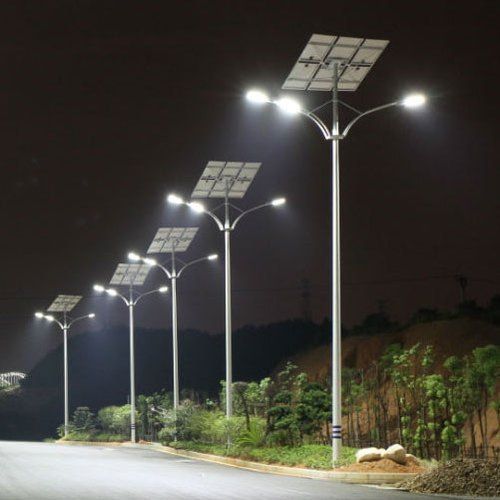
IES-type optics, 6–12 m poles, dusk-to-dawn with adaptive dimming and motion-boost profiles.
Street, campus and pathway lighting engineered for outdoor reliability—optimized optics, MPPT control and LiFePO4 storage. We handle design, approvals and deployment so you get safer corridors, predictable autonomy and lower lifetime costs without trenching.
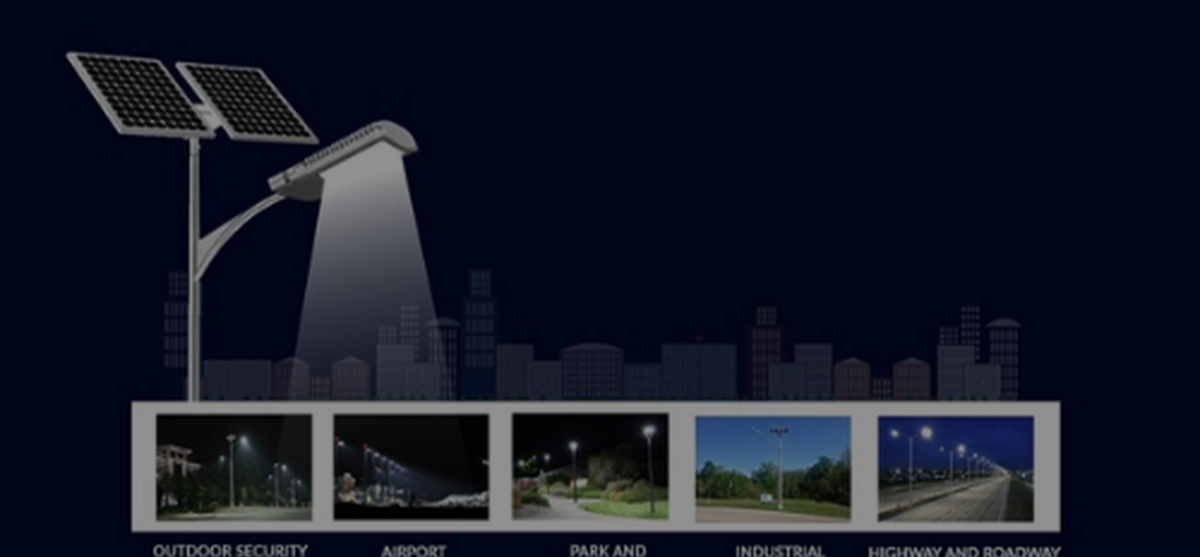
Pick from our proven categories—tailored optics, mounting, and control profiles for each use-case.
STREET LIGHTIES-type optics, 6–12 m poles, dusk-to-dawn with adaptive dimming and motion-boost profiles.
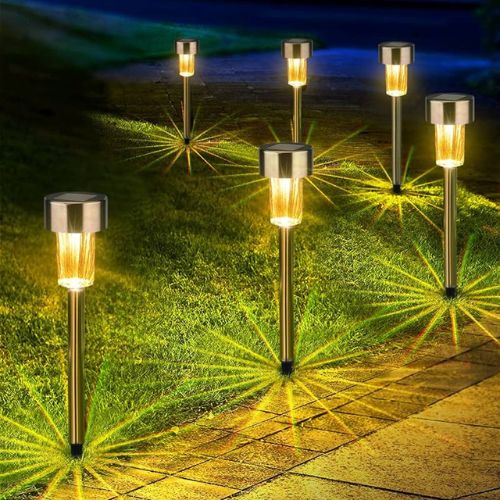
 PATH / GARDEN
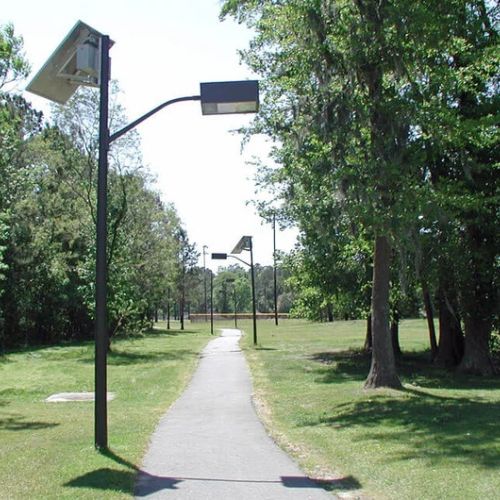
Low-glare bollards and post-tops at 3–4.5 m for pedestrian comfort and safety.
 HIGH MAST
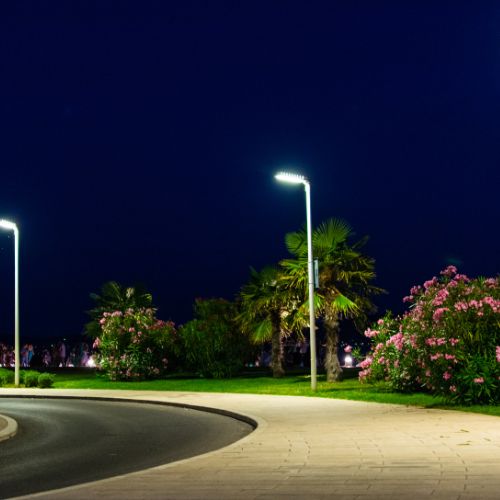
12–20 m masts with multi-flood optics; great for bus depots, ports and town squares.
 FLOOD / COURTYARD
Wide beam uniformity, mounting flexibility, and motion-triggered boost mode for security.
Standards & targets: IEC 60598-2-3 luminaires; IP/IK rating per site class; MNRE guidance for standalone systems.
Engineered outdoor lighting that lowers lifetime cost while improving safety and sustainability.
Cuts trenching/cabling and reduces energy bills—ideal for new streets, campuses and retrofits.
Dusk-to-dawn with 3–5 nights autonomy and adaptive dimming for cloudy days.
Better visibility and uniformity using LED optics tailored to road class and pedestrian areas.
MPPT controllers, motion sensors, dimming schedules, and remote monitoring options.
IP66+ luminaires, IK08+, anti-corrosion hardware, BIS/IEC-aligned components.
Modular poles, integrated batteries, quick foundations; minimal shutdown or civil work.
We document road classes, dark spots, existing poles, security zones and footfall. Target lux levels and uniformity are agreed with stakeholders. A quick solar resource and shading scan helps pick feasible pole heights, mast locations and typical lumen packages before design.
Photometric layouts and pole spacing are simulated to achieve uniformity, glare control and targeted lux values. We size PV, battery and controller for autonomy, define dimming schedules or motion-boost profiles, and assemble a bill of materials with delivery timeline.
Specifications are aligned to BIS/IEC guidelines, IP66/IK08 targets, and relevant civic norms. Where required, we prepare structural checks, foundation drawings and utility/NOC documentation. This ensures materials, ratings and workmanship meet municipal or campus standards prior to execution.
Foundations, poles and luminaires are installed with corrosion-protected hardware. Controllers are programmed for dusk-to-dawn logic and staged dimming. Cable routing, earthing, surge protection and signage follow safety checklists, minimizing civil disruption and enabling phased, low-downtime commissioning across corridors.
Night trials verify lux levels at representative points and check uniformity and glare. Control profiles are tuned for the site. Handover includes test reports, as-built drawings, programming files and basic training for on-ground staff and facility teams.
Preventive cleaning, battery health checks and ticketed breakdown response keep reliability high. Optional remote monitoring tracks energy, alarms and uptime. Seasonal adjustments to dimming or motion thresholds maintain autonomy targets during monsoons and extend component life through measured operation.
Explore the potential of solar energy and start saving from Day One!
Standalone solar street lights, pathway/bollard lighting, solar high masts, courtyard/flood lighting, and integrated 'all-in-one' luminaires with motion sensing and adaptive dimming.
Typical specs use 3–5 nights of autonomy with dusk-to-dawn operation and adaptive dimming to extend battery life. We size autonomy based on latitude, weather and target service level.
Most municipal & campus deployments target IP66 for dust/water ingress and IK08 or better for impact resistance. Coastal or industrial zones may need enhanced corrosion protection.
LiFePO₄ is preferred for safety, thermal stability, and 2,000–3,000+ cycle life. For extreme climates or ultra-long life, LTO or higher-end packs can be considered.
Yes. We provide pole height/spacing optimization, lux/uniformity simulations and glare control per street typology, then validate at site.
Premium panels, expert installation, zero hassle.